Creamy Shrimp Risotto with Peas Recipe
Shrimp Risotto with Peas is a dish that truly sings with springtime flavors and comforting creaminess. There’s something undeniably special about a perfectly executed risotto, and this version, with plump, sweet shrimp and vibrant green peas, is a guaranteed crowd-pleaser. It’s the kind of meal that feels both elegant enough for a special occasion and wonderfully accessible for a weeknight treat. I adore how the Arborio rice transforms into a velvety dream, absorbing the rich seafood broth and infusing every bite with deliciousness. The pop of fresh peas adds a welcome brightness and a delightful textural contrast, making this Shrimp Risotto with Peas a truly harmonious and satisfying experience. It’s the ultimate comfort food elevated.
Why You’ll Love This Shrimp Risotto with Peas
A symphony of flavors and textures
This Shrimp Risotto with Peas isn’t just another pasta dish; it’s an experience. The creamy, starchy rice, lovingly stirred to release its magic, creates a luxurious base that perfectly complements the sweetness of the shrimp and the fresh burst of peas. It’s a dish that showcases the beauty of simple, quality ingredients coming together in perfect harmony. The subtle richness from a touch of Parmesan cheese and a splash of white grape juice elevates the entire dish, making it feel like a restaurant-quality meal right in your own kitchen.
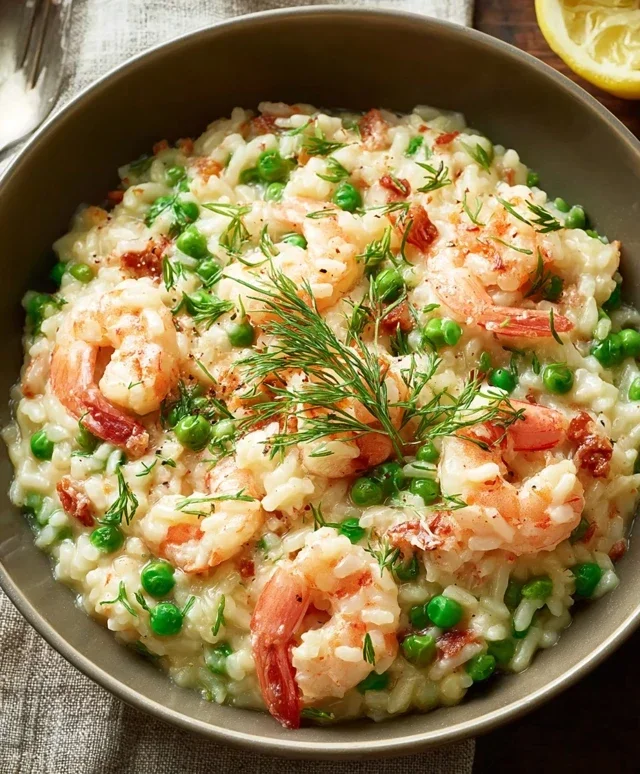
Shrimp Risotto with Peas
This Shrimp Risotto with Peas is a delightful dish that’s surprisingly easy to make, even if you’re new to risotto. The creamy texture of the rice, combined with the sweet pop of peas and tender shrimp, makes for a truly satisfying meal. The subtle anise notes from the fennel seeds and the bright citrus from the lemon really elevate the seafood flavors. Let’s get started!
Ingredients:
Preparing the Risotto Base
The key to a great risotto is patience and a good quality stock. First things first, let’s get our stock warmed up. Pour your 2 ¾ cups of fish or seafood stock into a small saucepan and bring it to a gentle simmer over low heat. Keep it warm throughout the cooking process; adding cold stock will shock the rice and hinder the creamy development. In a separate, wide, heavy-bottomed pan or a Dutch oven, melt 1 tablespoon of butter with 1 tablespoon of extra-virgin extract olive oil over medium heat. Once the butter is melted and the oil is shimmering, add your finely minced shallot (or onion, if you’re using that). Cook the shallots, stirring frequently, until they are softened and translucent, about 3-4 minutes. Be careful not to brown them, as this can add an undesirable bitter note to your risotto. Next, add the minced garlic and the crushed fennel seeds to the pan. Stir and cook for another minute until fragrant. The aroma here is already wonderful, a hint of what’s to come!
Toasting the Rice
Now it’s time for the star of the show – the risotto rice. Add your 5 oz of risotto rice (Arborio is a great choice for begin extractners, as it’s readily available and forgiving) to the pan with the shallots, garlic, and fennel. Stir the rice continuously for about 2 minutes. You want to toast the grains slightly. You’ll notice the edges of the rice grains will start to look a little translucent, while the centers remain opaque. This toasting process helps the rice absorb liquid more evenly and contributes to the creamy texture. Don’t rush this step; it’s crucial for the final result.
Deglazing and Gradual Liquid Addition
Once the rice is toasted, pour in the ½ cup of dry white grape juice (Pinot Grigio is perfect for this, as it adds a lovely subtle acidity without being overpowering). Stir the rice and juice vigorously until the liquid is almost completely absorbed. This is called deglazing, and it adds another layer of flavor. Now, the risotto magic truly begin extracts. Start adding your warm stock, one ladleful at a time. Pour in the first ladleful of warm stock and stir the rice constantly until most of the liquid has been absorbed. This constant stirring is what releases the starch from the rice, creating that signature creamy texture. Don’t add the next ladle of stock until the previous one has been almost fully absorbed. Continue this process, ladle by ladle, stirring frequently. This patient addition of liquid and constant stirring can take anywhere from 18 to 25 minutes, depending on your rice and heat. Resist the urge to add more liquid than I’ve suggested; we’re aiming for a perfectly cooked, al dente rice.
Incorporating the Peas and Shrimp
When you have about 5 minutes of cooking time left, and the rice is starting to look plump and creamy but still has a slight bite (al dente), it’s time to add the peas. Stir in your ½ cup of thawed frozen peas (or fresh shelled peas if you have them). If you’re using fresh peas, they might need a minute or two longer to cook. Continue stirring until the peas are heated through and bright green. Now, gently fold in your ½ lb of cooked small shrimp. You only need to cook the shrimp long enough to warm them through, as they are already cooked. Overcooking them will make them tough. Stir them in gently so you don’t break them up too much.
Finishing Touches and Serving
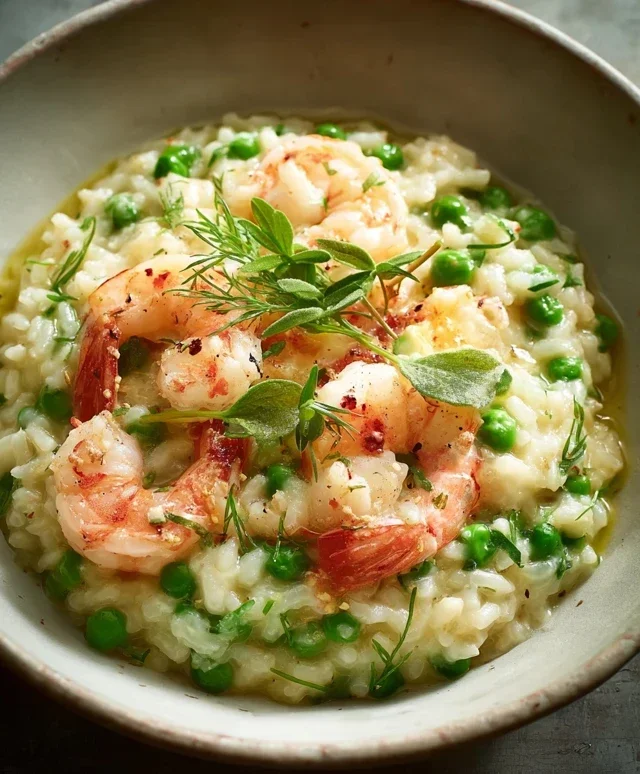
Once the shrimp are warmed and the rice is perfectly al dente and has that beautiful creamy consistency, it’s time to finish our risotto. Remove the pan from the heat. Stir in the 1 oz of finely grated Pecorino Romano cheese. The cheese will melt into the risotto, adding a salty, nutty flavor and further enhancing the creaminess. Next, stir in the 1 teaspoon of finely grated lemon zest and the 2 tablespoons of fresh lemon juice. The lemon juice provides a crucial brightness that cuts through the richness and ties all the flavors together. Taste your risotto and adjust seasoning if necessary with a pinch of salt and freshly ground black pepper. The stock and Pecorino Romano are already salty, so be judicious with the salt. To serve, spoon the risotto into shallow bowls. Garnish generously with fresh dill leaves and a drizzle of extra-virgin extract olive oil. The fresh dill adds a lovely aromatic and herbaceous finish. Enjoy this comforting and elegant shrimp risotto immediately!
Conclusion:
I hope you enjoyed learning how to make this delicious Shrimp Risotto with Peas! This recipe truly is a winner because it strikes a perfect balance between creamy, comforting risotto and the bright, fresh flavors of shrimp and sweet peas. It’s surprisingly simple to achieve restaurant-quality results right in your own kitchen, making it ideal for a special weeknight dinner or even for entertaining guests. The luscious Arborio rice, slowly stirred with rich broth, creates a velvety texture that’s simply irresistible.
For serving, I love to garnish my shrimp risotto with a sprinkle of fresh parsley and a drizzle of good quality olive oil. A wedge of lemon is also a must for a burst of citrusy brightness. This dish pairs beautifully with a crisp white grape juice like Pinot Grigio or Sauvignon Blanc. If you’re feeling adventurous, consider adding a pinch of red pepper flakes for a subtle kick, or substituting lemon zest for some of the fresh lemon juice for a more intense citrus aroma. Don’t be afraid to experiment! I truly encourage you to give this Shrimp Risotto with Peas a try; I’m confident you’ll love it as much as I do.
Frequently Asked Questions:
Can I use pre-cooked shrimp?
Yes, you can! If using pre-cooked shrimp, add them in the last 2-3 minutes of cooking the risotto, just long enough to warm them through. Overcooking pre-cooked shrimp can make them tough.
What if I don’t have Arborio rice?
While Arborio rice is ideal for risotto due to its high starch content, you can substitute it with other short-grain rice varieties like Carnaroli or Vialone Nano if available. These will also yield a creamy result.
Can I make this dairy-free?
Absolutely! For a dairy-free version, omit the Parmesan cheese and use a plant-based butter or olive oil for sautéing. You can also stir in a splash of unsweetened, plain plant-based milk at the end for extra creaminess.
Shrimp Risotto with Peas
A creamy and flavorful risotto featuring tender shrimp and sweet peas, enhanced with lemon and dill.
Ingredients
-
2 ¾ cups fish or seafood stock
-
1 tbsp butter
-
1 tbsp extra-virgin olive oil
-
1 shallot, minced
-
1 clove garlic, minced
-
½ tsp crushed fennel seeds
-
5 oz risotto rice
-
½ cup dry white grape juice
-
½ cup frozen peas, thawed
-
½ lb cooked small shrimp
-
1 oz finely grated Pecorino Romano cheese
-
1 tsp finely grated lemon zest
-
2 tbsp lemon juice
-
Fresh dill leaves
-
Extra-virgin olive oil
Instructions
-
Step 1
Heat the fish or seafood stock in a saucepan and keep it warm over low heat. -
Step 2
In a large skillet, melt the butter with the olive oil over medium heat. Add the minced shallot and cook until softened, about 3-4 minutes. Stir in the minced garlic and crushed fennel seeds and cook for another minute until fragrant. -
Step 3
Add the risotto rice to the skillet and stir for 1-2 minutes until the grains are lightly toasted and translucent around the edges. -
Step 4
Pour in the white grape juice and stir until it is fully absorbed by the rice. -
Step 5
Begin adding the warm stock, one ladleful at a time, stirring constantly until each addition is absorbed before adding the next. Continue this process for about 15-20 minutes, or until the rice is creamy and al dente. -
Step 6
Stir in the thawed peas and cooked shrimp. Cook for another 2-3 minutes, until the peas are tender and the shrimp are heated through. -
Step 7
Remove the skillet from the heat. Stir in the grated Pecorino Romano cheese, lemon zest, and lemon juice. Taste and adjust seasoning if necessary. -
Step 8
Garnish with fresh dill leaves and a drizzle of extra-virgin olive oil before serving.
Important Information
Nutrition Facts (Per Serving)
It is important to consider this information as approximate and not to use it as definitive health advice.
Allergy Information
Please check ingredients for potential allergens and consult a health professional if in doubt.