Authentic Japchae Recipe – Delicious Korean Stir-Fried Noodles
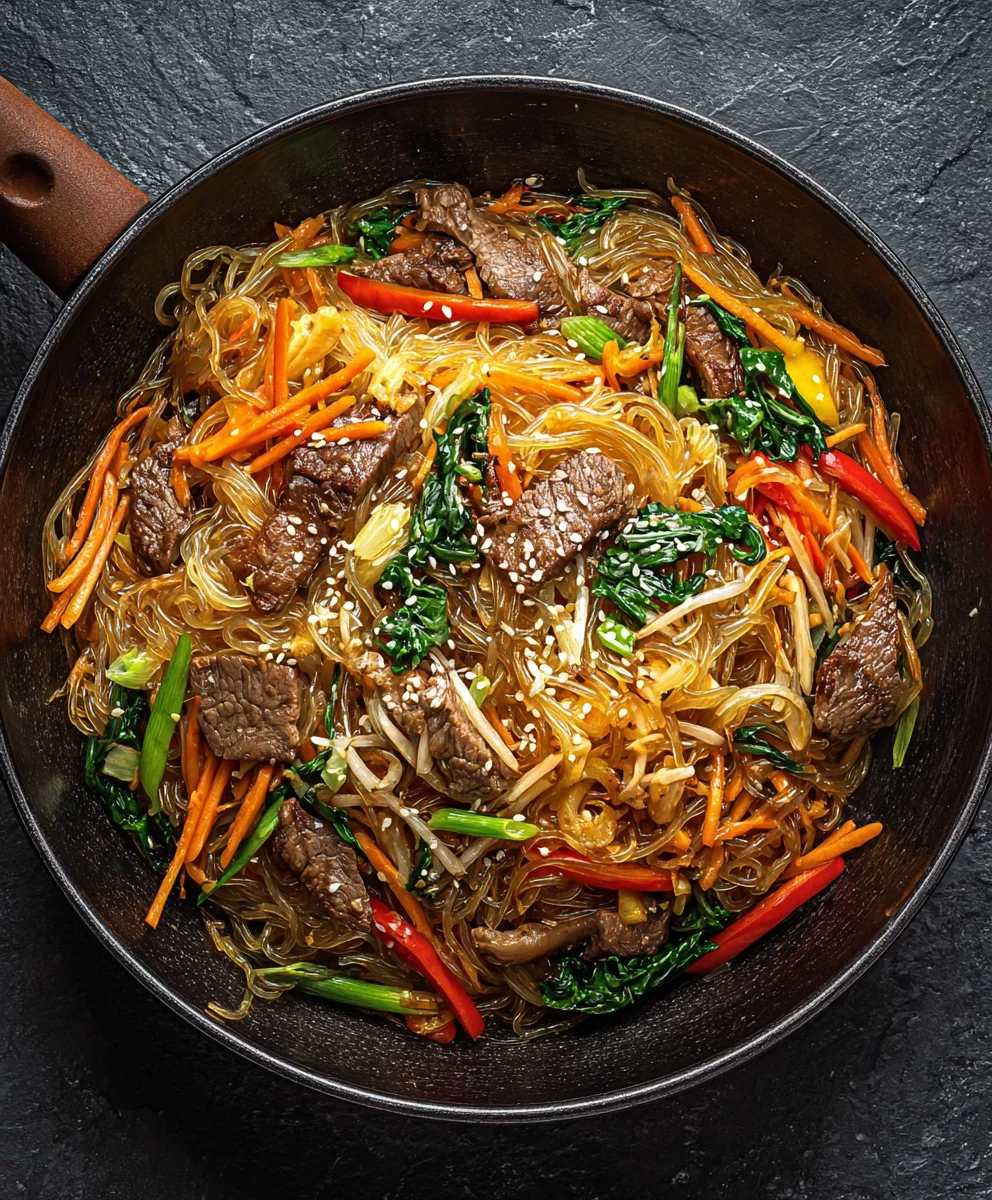
Japchae is a dish that instantly transports me to a place of comfort and celebration. It’s a vibrant tapestry of flavors and textures, a true Korean classic that holds a special place in my heart and in countless kitchens around the world. What makes Japchae so beloved? It’s the harmonious marriage of sweet, savory, and slightly earthy notes, all brought together by the wonderfully chewy, slippery sweet potato noodles. Each forkful is a delightful adventure, with tender stir-fried vegetables like crisp bell peppers, crunchy carrots, and earthy mushrooms mingling with thinly sliced beef or tofu. The delicate balance of soy sauce, sesame oil, and a hint of sugar creates a sauce that coats everything beautifully, leaving a lingering, irresistible aroma. This isn’t just a side dish; it’s a complete experience, often gracing tables during holidays and special gatherings because it’s so universally adored. Get ready to create your own unforgettable Japchae!
Ingredients:
- 2 lb thin-sliced beef (chuck or sirloin are excellent choices for tenderness)
- 1 lb Korean sweet potato noodles (also known as glass noodles or dangmyeon)
- 3 medium carrots, julienned into thin matchsticks
- 1 large white onion, thinly sliced
- 1/2 bunch green onions, chopped into 2-inch lengths
- 6 garlic cloves, minced
- 1/2 lb fresh spinach leaves
- 4 tablespoons sesame oil (divided), a good quality toasted sesame oil will enhance the flavor
- 1 tablespoon olive oil (for stir-frying)
- 6 tablespoons soy sauce (or tamari for a gluten-free version)
- 3 tablespoons brown sugar
Preparing the Ingredients
The key to a beautiful and delicious Japchae is in the preparation of your ingredients. Taking the time to julienne everything uniformly will not only make your dish look professional but will also ensure even cooking. For the beef, if it’s not already thinly sliced, you can achieve this by partially freezing it for about 30-45 minutes, which makes it much easier to slice thinly against the grain. If you’re using chicken, opt for boneless, skinless thighs for better flavor and moisture. For tofu, a firm or extra-firm variety will hold its shape best when cooked. Shrimp should be peeled and deveined. The carrots should be cut into pieces about the size of a matchstick, and the onion sliced thinly to soften quickly. For the spinach, a quick blanch is all it needs to wilt perfectly. Mincing the garlic finely will allow its flavor to distribute evenly throughout the dish.
Cooking the Components
Japchae is traditionally made by cooking each component separately before combining them. This method ensures that each ingredient is cooked to perfection and retains its individual texture and flavor.
Marinating and Cooking the Beef
In a medium bowl, combine about 2 tablespoons of soy sauce and 1 tablespoon of sesame oil with the thinly sliced beef. Add about half of the minced garlic. Toss everything together well to ensure the beef is evenly coated. Let this marinate for at least 15-20 minutes at room temperature, or longer in the refrigerator. Heat the 1 tablespoon of olive oil in a large skillet or wok over medium-high heat. Add the marinated beef in a single layer (you may need to do this in batches to avoid overcrowding the pan, which would steam rather than sear the beef). Stir-fry until the beef is browned and cooked through, which should only take a few minutes. Once cooked, remove the beef from the skillet and set it aside in a clean bowl.
Sautéing the Vegetables
Using the same skillet (no need to wash it, the beef drippings add flavor), add a touch more olive oil if needed. Add the thinly sliced white onion and stir-fry over medium-high heat until it begin extracts to soften and become translucent, about 3-4 minutes. Add the julienned carrots and continue to stir-fry for another 3-4 minutes until they are tender-crisp. Finally, add the remaining minced garlic and the chopped green onions. Stir-fry for another minute until fragrant, being careful not to burn the garlic. Remove the sautéed vegetables from the skillet and add them to the bowl with the cooked beef.
Preparing the Noodles and Spinach
While your vegetables are cooking, bring a large pot of water to a rolling boil. Add the Korean sweet potato noodles and cook according to package directions, usually about 6-8 minutes, until they are translucent and tender but still have a slight chew. Be careful not to overcook them, as they will continue to soften when tossed with the other ingredients. Once cooked, drain the noodles thoroughly in a colander and rinse them briefly with cold water to prevent them from sticking together. In the same pot, add a fresh batch of boiling water. Add the spinach and blanch it for just 30 seconds to a minute, until it wilts. Drain the spinach immediately and squeeze out any excess water. Chop the blanched spinach roughly.
Assembling the Japchae
Now comes the exciting pargin extract bringing all these beautifully prepared components together! This is where the magic happens and your Japchae transforms into the vibrant and flavorful dish it’s meant to be. This stage requires a bit of gentle handling to ensure everything is well combined without becoming mushy.
Seasoning and Combining
In a large mixing bowl, combine the cooked noodles, sautéed vegetables, cooked beef, and the chopped spinach. In a separate small bowl, whisk together the remaining soy sauce, the brown sugar, and the remaining 2 tablespoons of sesame oil. This is your flavor-packed sauce. Pour this sauce over the combined ingredients in the large bowl. Using tongs or clean hands, gently toss everything together, ensuring that the sauce is evenly distributed and coats all the ingredients. Continue tossing until the noodles are well-coated in the sauce and the colors of the dish are vibrant and mingled. Taste a noodle and a piece of beef to adjust seasoning if necessary; you might want to add a touch more soy sauce for saltiness or a pinch more brown sugar for sweetness.
Finishing Touches and Serving
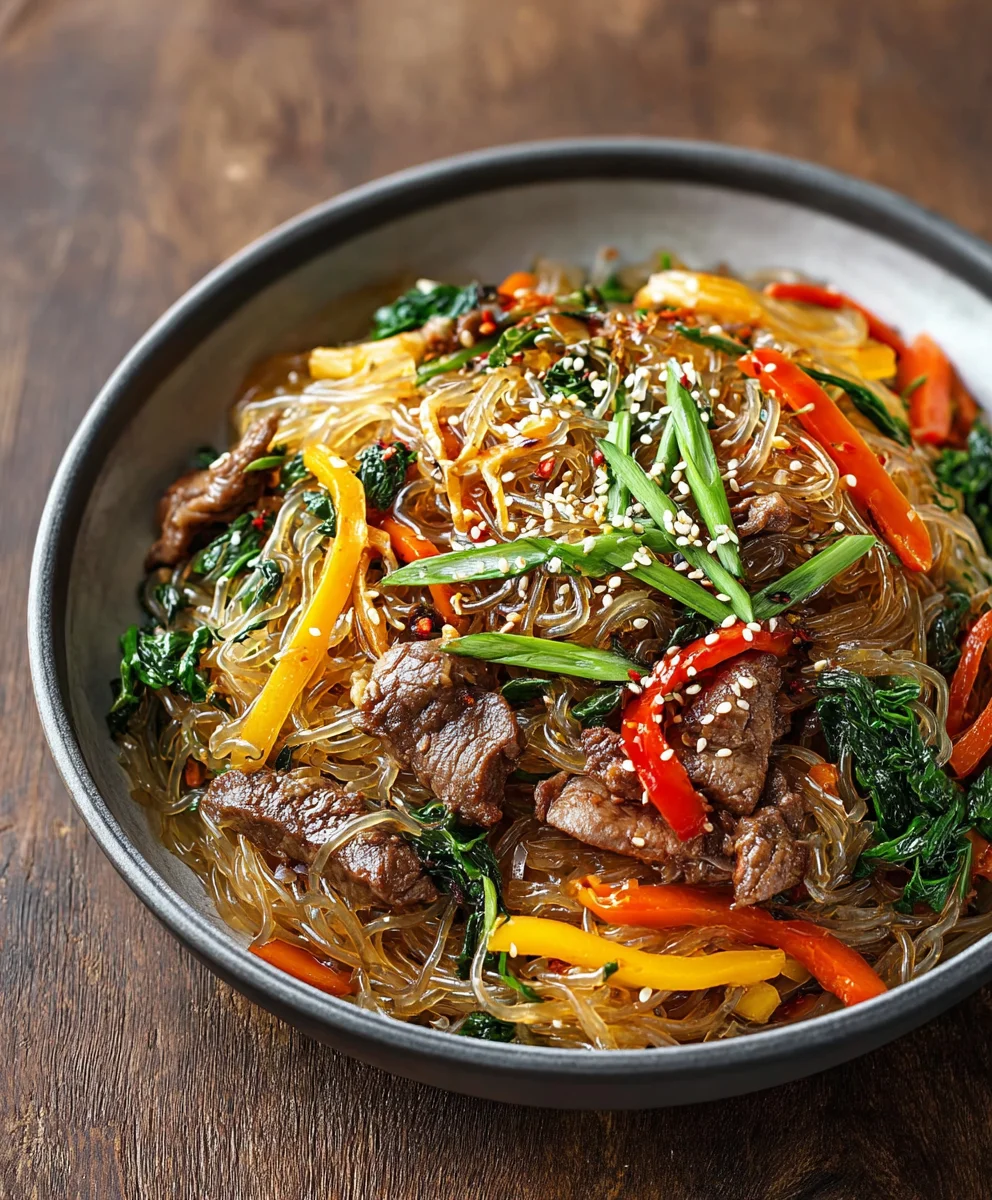
Once everything is well-mixed and seasoned to your liking, your Japchae is almost ready! You can serve it immediately while it’s still warm, or it can be enjoyed at room temperature. For an extra touch of authentic flavor and visual appeal, you can sprinkle a little extra toasted sesame oil over the top just before serving. Some people also like to garnish their Japchae with toasted sesame seeds for added texture and nutty flavor. To serve, portion the Japchae into individual bowls or onto a large platter. The combination of the chewy noodles, tender beef, crisp-tender vegetables, and the savory-sweet sauce is truly a delight. This dish is wonderfully satisfying on its own, but it also pairs beautifully with a side of kimchi or other Korean banchan (side dishes). Enjoy the complex flavors and textures that make Japchae such a beloved Korean classic!
Conclusion:
We’ve now journeyed through the delightful process of creating authentic Japchae, a dish that truly embodies the vibrant flavors and textures of Korean cuisine. From the satisfying chew of the glass noodles to the colorful medley of vegetables and tender protein, this Japchae recipe is sure to become a favorite in your kitchen. Remember, the key to exceptional Japchae lies in the freshness of your ingredients and the careful balance of sweet, savory, and slightly nutty notes from the soy sauce and sesame oil marinade. Don’t be afraid to adjust the seasoning to your personal preference – that’s the beauty of home cooking!
Serving this Japchae is a joy in itself. It’s fantastic as a standalone main course, offering a complete and satisfying meal. It also shines brilliantly as a side dish, complementing grilled meats like bulgogi or kalbi, or adding a touch of elegance to a Korean barbecue spread. For variations, feel free to experiment with different proteins such as thinly sliced beef, shrimp, or even tofu for a vegetarian option. You can also add other vegetables like shiitake mushrooms or spinach. We encourage you to give this recipe a try and to make it your own. Enjoy the process and savor every delicious bite of your homemade Japchae!
Frequently Asked Questions about Japchae:
Q: Can I make Japchae ahead of time?
A: Yes, you can prepare many components of Japchae in advance. The vegetables can be sautéed and the noodles cooked separately and stored in the refrigerator. However, it’s best to toss everything together with the sauce just before serving for the freshest taste and texture. The noodles can absorb too much sauce if left sitting for too long.
Q: What kind of noodles are used in Japchae?
A: The traditional noodles for Japchae are made from sweet potato starch, commonly known as dangmyeon or Korean glass noodles. These noodles have a distinctive translucent appearance and a delightfully chewy texture that holds up well when stir-fried.
Q: How do I prevent the noodles from sticking together?
A: After rinsing the cooked noodles in cold water, it’s a good idea to toss them with a little bit of sesame oil. This helps to prevent them from clumping and gives them a subtle sheen. Make sure to drain them thoroughly before adding them to the stir-fry.
Authentic Japchae Recipe – Delicious Korean Stir-Fried Noodles
A classic Korean dish featuring chewy sweet potato noodles stir-fried with tender beef and a colorful assortment of vegetables in a savory-sweet sauce.
Ingredients
-
2 lb thin-sliced beef (chuck or sirloin)
-
1 lb Korean sweet potato noodles (glass noodles)
-
3 medium carrots, julienned
-
1 large white onion, thinly sliced
-
1/2 bunch green onions, chopped
-
6 garlic cloves, minced
-
1/2 lb fresh spinach leaves
-
4 tablespoons sesame oil (divided)
-
1 tablespoon olive oil
-
6 tablespoons soy sauce (or tamari for gluten-free)
-
3 tablespoons brown sugar
Instructions
-
Step 1
Marinate the beef: In a medium bowl, combine beef with 2 tbsp soy sauce, 1 tbsp sesame oil, and half of the minced garlic. Toss to coat and let marinate for at least 15-20 minutes. -
Step 2
Cook the beef: Heat 1 tbsp olive oil in a large skillet or wok over medium-high heat. Stir-fry beef in batches until browned and cooked through. Set aside. -
Step 3
Sauté vegetables: Using the same skillet, stir-fry sliced onion until softened (3-4 minutes). Add julienned carrots and stir-fry until tender-crisp (another 3-4 minutes). Add remaining garlic and green onions, stir-fry for 1 minute until fragrant. Add sautéed vegetables to the bowl with the beef. -
Step 4
Prepare noodles and spinach: Cook sweet potato noodles in boiling water according to package directions (6-8 minutes) until translucent and tender. Drain and rinse with cold water. Blanch spinach in boiling water for 30 seconds to 1 minute until wilted, drain and squeeze out excess water. Chop spinach. -
Step 5
Assemble and season: In a large mixing bowl, combine cooked noodles, sautéed vegetables, cooked beef, and chopped spinach. In a small bowl, whisk together remaining soy sauce, brown sugar, and remaining 2 tbsp sesame oil. Pour sauce over combined ingredients. Gently toss everything to evenly coat. -
Step 6
Serve: Taste and adjust seasoning if needed. Sprinkle with extra sesame oil and toasted sesame seeds (optional) before serving warm or at room temperature.
Important Information
Nutrition Facts (Per Serving)
It is important to consider this information as approximate and not to use it as definitive health advice.
Allergy Information
Please check ingredients for potential allergens and consult a health professional if in doubt.